- Nov 21, 2025
The Truth About Eye Patches for Perimenopause Dark Circles

If you’ve ever looked in the mirror during peri/menopause and thought, “Why do my under-eyes look so different all of a sudden?”—you’re not imagining it. The truth is, your skin is changing faster than anyone warned you about, and even the best products can feel useless when you’re battling puffiness, stubborn dark circles, and dryness that seems to appear overnight. And here’s the frustrating part: even when you do everything “right,” your results still fall flat. That’s usually when most women start Googling how to use eye patches correctly in a skincare routine, wondering if they’re missing something simple. Check out our 7-Day Menopause Skin Reset Plan to learn a complete perimenopause routine.
You’re not alone in that frustration. During peri/menopause, shifting estrogen levels change your skin’s thickness, hydration, and ability to hold moisture—especially under the eyes. That’s why your usual routine suddenly stops working, why puffiness hits harder in the morning, and why your dark circles look deeper even when you’re sleeping well. None of this is “your fault”—it’s hormonal biology.
But here’s the good news: the problem is fixable. In this guide, you’ll learn exactly how to apply eye patches the correct way, the science behind why your under-eyes behave differently at 40+, and the tiny application mistake that’s been quietly reducing your results by up to 70%.
#1: What’s Actually Happening to Your Under-Eyes after 40?
The Truth About Eye Patches for…
By the time you reach your 40s, the under-eye area begins changing for reasons that are completely hormonal—not because you’re doing anything wrong. This research from Mayo Clinic shows that in the first five years after menopause, women lose up to 30% of their collagen, and that loss shows up fastest where your skin is thinnest: right under your eyes! That’s why you suddenly see darker shadows, more morning puffiness, and fine lines that seem to multiply overnight!
What’s really happening is a perfect storm of three biological shifts. Declining estrogen thins the skin, fat pads naturally diminish, and hormone-driven fluid retention increases morning puffiness. Together, these changes make your under-eye products feel less effective—even when your routine hasn’t changed at all.
A helpful analogy: imagine a plush sofa slowly losing its stuffing. The fabric stays the same, but every crease becomes more visible because the cushion underneath is disappearing. Your under-eyes behave in exactly the same way. Less collagen + less volume = more shadow, texture, and puffiness.
The 3 Biological Shifts Affecting Your Under-Eyes
1. Skin Thinning from Estrogen Loss
Reduced collagen = less structure
Blood vessels show through → darker circles
Light reflects poorly → looks more “tired”
2. Fat Pad Loss (Volume Hollowing)
A common Reddit complaint is: “My dark circles won’t go away no matter what I try.”
This is because hollowing creates:
Deeper tear trough shadows
A “sunken” appearance
Amplified darkness even with good sleep
3. Hormonal Fluid Retention (The Puffy Mornings)
Especially during peri/menopause, your body holds more fluid overnight.
This contributes to:
Morning puffiness (aka why puffy eyes morning menopause)
Slower lymphatic drainage
Worse swelling in dry climates (like Calgary)
Why Dry Climates Make It Worse
Dry climates like Calgary, Alberta’s low humidity pulls moisture out of already-stressed, thinner skin. That’s why puffiness may be worse in the morning and dryness creeps in by evening.
🔑 Key Insight: Hormonal changes + environmental dryness = deeper shadows, more puffiness, and faster dehydration.
How These Changes Affect Your Routine
It’s important to know that your skin now:
Absorbs products differently
Loses moisture faster
Reacts more to incorrect layering
Needs gentler but more strategic hydration
This is exactly why eye patches for peri/menopause dark circles can work beautifully—but only when applied correctly.
Actionable Takeaway (Do This First):
Before buying new products, adjust your expectations: your under-eyes aren’t “failing”—they’re operating with less collagen, less internal support, and less moisture. This is exactly why application order matters more than ever.
#2: The Eye Patch Application Mistake 90% of Women Make
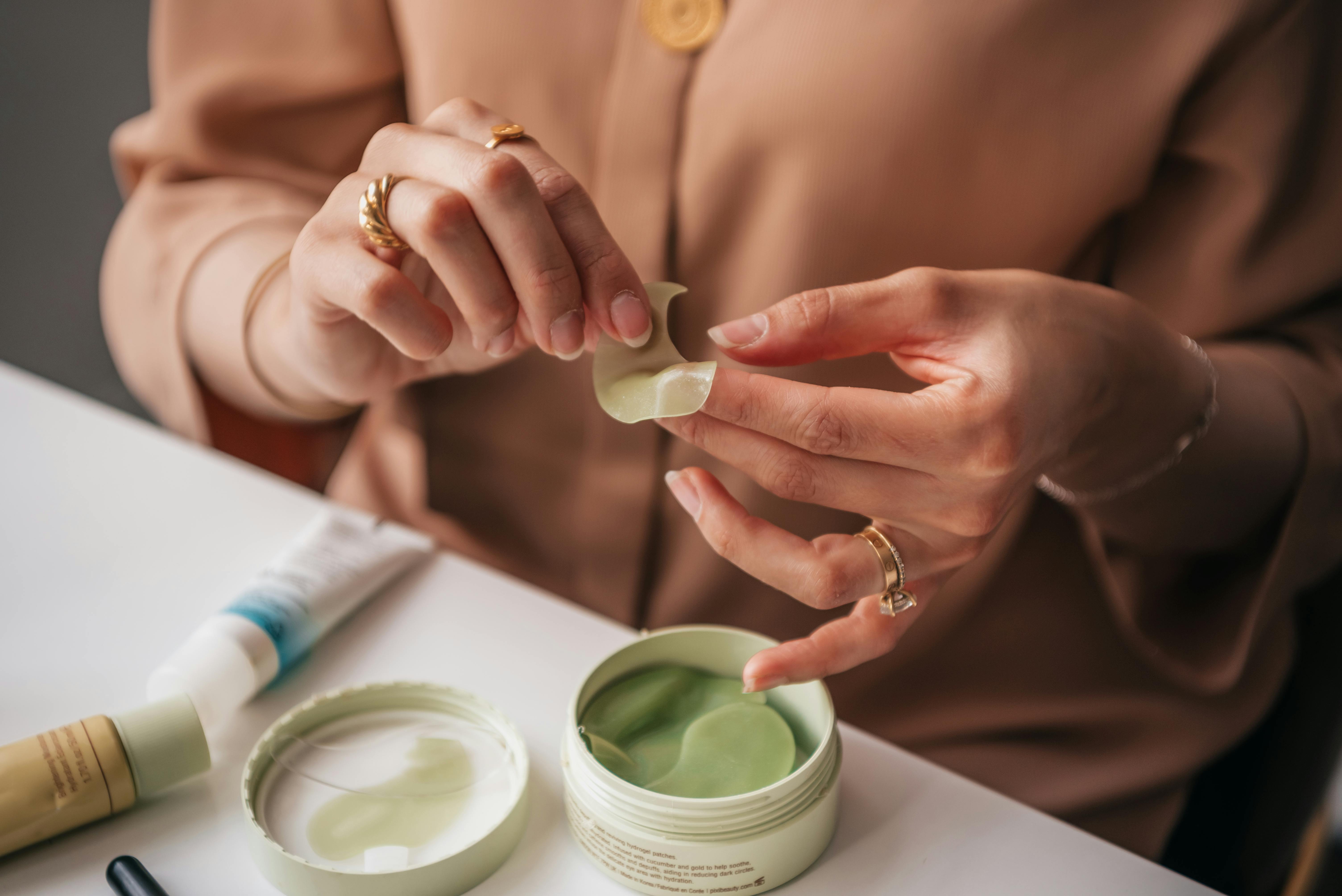
Most women apply eye patches at the end of their skincare routine—after serums, eye cream, and moisturizer—and that single mistake cuts their results by 60–70%. It feels logical to treat your skin first and patch last… but patches cannot deliver ingredients through thick layers of creams. Research shows they only penetrate 20–30% when applied over moisturizers. Even worse, when left on too long, they start pulling moisture out instead of putting it in!!!
Why Patches Don’t Work on Top of Moisturizer
Moisturizers and eye creams create a film on the skin.
This is great for sealing in hydration—but terrible for letting new ingredients enter.
Here’s what happens step by step:
You apply creams (creating a protective barrier).
You place eye patches over that barrier.
The (thinner) patch serum hits a wall—literally!
Active ingredients sit on top of the skin rather than penetrating it.
Women on Reddit explain it perfectly: “My eyes look better for an hour, then everything goes back to normal.”
That’s because the “result” you’re seeing is only surface-level hydration. Nothing meaningful reaches the deeper layers where collagen, firmness, and texture live.
⚠️ Dry climate warning:
Low humidity speeds up evaporation, making this mistake even more problematic for women over 40.
The Reverse Osmosis Mistake (The One That Makes Eyes Look Worse!!)
The second major mistake? Leaving patches on too long.
Here’s the timeline:
0–15 minutes: Skin absorbs hydration.
15–20 minutes: Peak absorption—this is the sweet spot.
20–30 minutes: Patch begins to dry out.
30+ minutes: Reverse osmosis begins → patch pulls water out of your skin.
Women 40+ repeatedly report: “I looked more crepey afterward without knowing why.”
This mechanism is why.
Think of it like placing a drying sponge on a damp countertop:
Once it dries, it absorbs water from the surface beneath it.
Your patch does the same thing to your under-eyes. 😬
Why This Mistake Hits Peri/menopause Skin Harder
Peri/menopause skin already struggles with:
Faster water loss
Thinner barrier
Higher sensitivity
Lower collagen reserves
Combine that with dehydration from over-worn patches and you get the common complaint: “I’ve tried everything, and nothing works.”
It’s not the product.
It’s the method!
Actionable Takeaway (Do This Tonight):
Apply your eye patches:
AFTER serums
BEFORE eye cream or moisturizer
For 15–20 minutes max
This one change increases patch effectiveness dramatically—especially for peri/menopause under-eyes that can’t afford to lose hydration.
#3: The Correct Application Order (The Method Dermatologists Actually Recommend)
Dermatologists agree on one thing: if you want your eye patches to actually work, they must be applied before your eye cream and moisturizer.
This one simple change increases ingredient absorption from about 20–30% (when patches are applied last) to 70% or more, simply because patches finally make direct contact with your skin instead of sitting on top of thick creams. The right order determines whether your patches deliver meaningful results—or just sit there looking cute but doing nothing.
The “Thinnest to Thickest” Rule (The Foundation of All Good Skincare)
Skincare always absorbs best when applied from thinnest → thickest, because:
Thin, water-based products (toners, essences, serums) penetrate quickly and deeply
Thicker products (eye creams, moisturizers, oils) create a protective seal
If you put patches on top of those thicker layers, that seal stops ingredients from traveling downward. Instead, everything stays on the surface—leading to the common complaint: “My patches only work for an hour.”
That “hour” is just temporary surface hydration—not real improvement.
A Real-World Analogy (So This Finally Makes Sense)
Think of it like layering clothing in winter:
A thermal base layer goes closest to your skin
A fluffy parka goes on top
You’d never put your thermal shirt over your coat—it wouldn’t warm you at all.
💡 Eye patches work the same way:
They’re like the “thermal layer” delivering active ingredients.
Eye cream and moisturizer are like the “coat” that seals everything in.
Patches applied on top of creams?
Just like wearing a thermal shirt over a puffy jacket—totally pointless.
The Exact Dermatologist-Approved Application Order
To ensure patches work on peri/menopause skin, the correct sequence is:
Cleanser
Toner or essence (optional)
Serums (bring them up to the orbital bone—not directly into the lash line)
Eye patches (on product-light skin)
Eye cream (to lock in the patch benefits)
Moisturizer
Facial oil or occlusive (optional, last step)
Following this order ensures your patches can actually help improve eye patches for peri/menopause dark circles, instead of just sitting on top of your skincare.
Morning vs. Night: Which Is Better for You?
Here's the thing: eye patches work differently depending on when you use them, and that timing matters for your perimenopause skin specifically.
Night Application (Recommended for Real Anti-Aging):
Your skin's circadian rhythm peaks during sleep—this is when collagen production happens, when cellular repair accelerates, and when your barrier function actually strengthens. Retinoid patches work best overnight because your skin is primed to receive them. You're giving those active ingredients 8 full hours to do their job without UVA/UVB interference. Plus, overnight is when your skin naturally releases more moisture, so hydration patches absorb deeper. Result: meaningful long-term changes in fine lines, firmness, and texture.
Morning Application (Best for Visible De-Puffing):
This is your "event mode" strategy. Caffeine-based patches work best in the morning because caffeine causes vasoconstriction—it literally shrinks swollen blood vessels. Refrigerated patches enhance this effect even more. It's a quick 15-minute fix that makes a visible difference for that morning puffiness that hits harder during perimenopause.
For Your Perimenopause Skin:
Most dermatologists recommend nighttime application 2-3 times weekly for genuine anti-aging results, plus optional morning use 1-2 times weekly for de-puffing as needed. Your hormonal skin needs that overnight repair window more than it needs quick morning fixes. When your collagen is dropping 30% every year, you want to maximize the hours your body is actually making collagen. That's nighttime.
Why This Order Matters Even More During Peri/menopause
Because peri/menopause skin is:
Thinner
Drier
More reactive
Losing collagen faster
More prone to transepidermal water loss (TEWL)
…the success of your patches depends heavily on correct layering.
This same mistake is why most women 45+ think their patches “stopped working.”
Actionable Takeaway (Do This Tonight):
Follow this exact sequence:
Cleanse → toner → serums → eye patches → eye cream → moisturizer.
This change alone can dramatically increase the effectiveness of your patches and restore the hydration support your peri/menopause under-eyes have been missing.
#4: The Timing Question: How Long Should Patches Stay On?
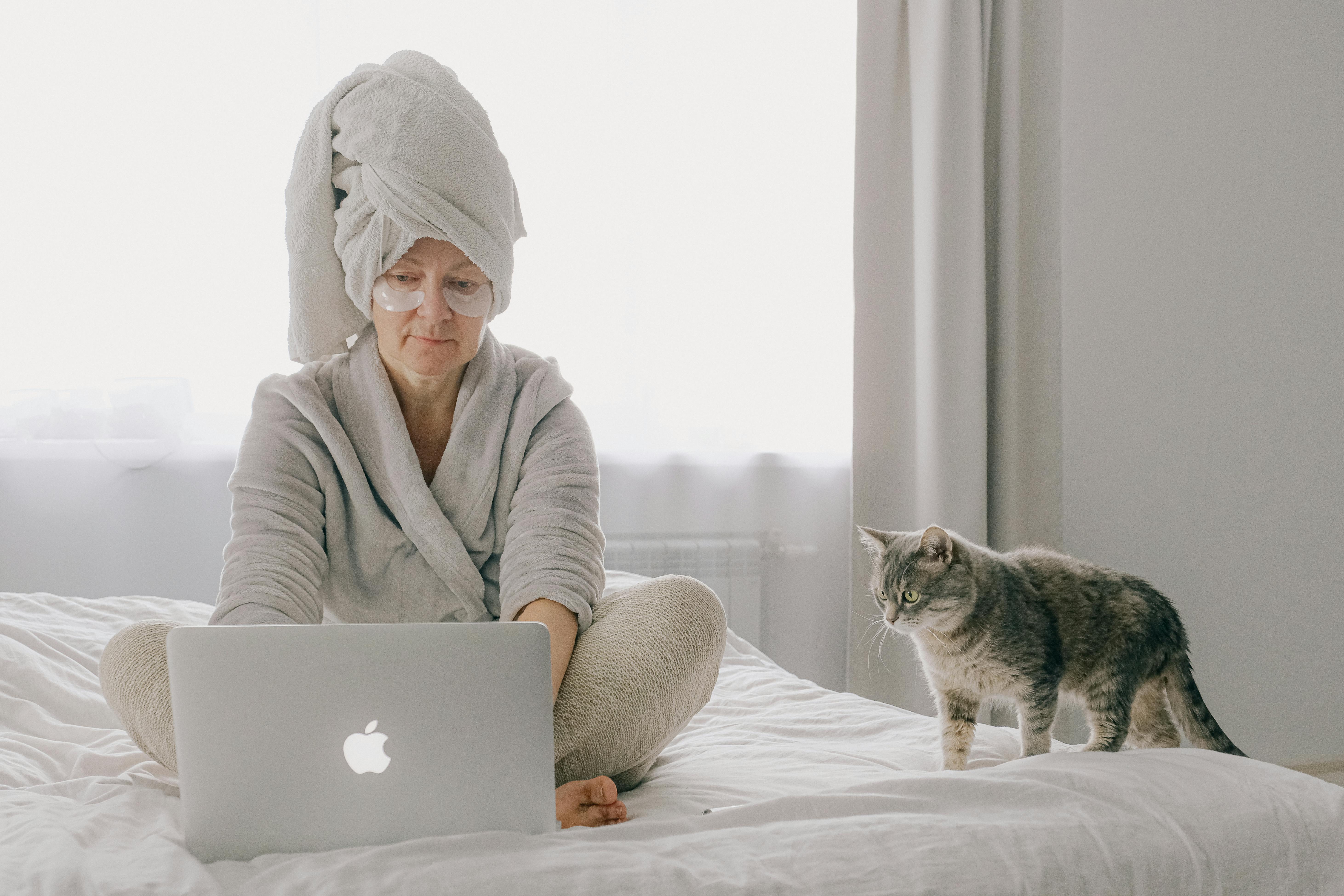
The honest answer? No more than 15–20 minutes!
This is the window dermatologists consistently recommend because it’s the only timeframe where patches give your skin hydration instead of pulling it out!
That’s right, you heard me, any longer and they start TAKING THE MOISTURE BACK!
After about the 20-minute mark, patches begin to dry, and once that happens, the process reverses—your under-eyes actually start losing moisture instead of gaining it. For peri/menopause skin already struggling with dehydration, this becomes a major problem.
What’s Really Happening Under the Surface (Minute-by-Minute)
Eye patches go through predictable phases—and each one affects your skin differently.
0–15 Minutes: Hydration Delivery Phase
Patch is fully saturated with serum
Skin absorbs the active ingredients
Cooling effect reduces puffiness
Under-eyes feel soothed and refreshed
15–20 Minutes: Peak Absorption Phase
Your skin has taken what it needs
Patch begins losing moisture
This is the ideal removal window
20–30 Minutes: Drying Phase (Danger Zone Begins)
In dry climates, this happens even faster.
Patch surface becomes dull or matte
Edges start to lift
Serum is mostly evaporated
30+ Minutes: Reverse Osmosis Phase 🚫
This is where the big problems happen:
⚠️ Key Warning: When a patch begins to dry on your skin, it starts pulling water back out.
This is what makes under-eyes look more crepey, more lined, and more dehydrated afterward.
This aligns with what women often report on Reddit: “My eyes looked worse a few hours later—like the lines came back stronger.”
The Sponge Analogy (The Easiest Way to Understand This)
Think of a wet sponge placed on a damp countertop:
When the sponge is full → it gives moisture
Once it starts drying → it absorbs moisture from the surface beneath it
Your eye patch is the sponge.
Your under-eye skin is the countertop.
Once the patch dries… it starts taking moisture from you. 😬
How to Tell When Your Patch Is “Done”
Watch for these signs:
Edges lifting or curling
Patch surface turning matte instead of glossy
Patch feels less cool or less plump
Patch visibly thins as moisture evaporates
The moment you see any of these, remove immediately—even if it hasn’t been 20 minutes.
Why This Matters More Now (Peri/menopause Edition)
Your skin is:
Thinner
More dehydrated
More sensitive
Less able to recover from moisture loss
This makes over-wearing patches twice as damaging—your barrier simply can’t afford the water loss reverse osmosis causes.
Actionable Takeaway:
Always set a timer for 15–20 minutes.
Remove patches as soon as the timer goes off, and follow with eye cream to seal hydration in.
This one habit protects your moisture barrier and ensures maximum results for peri/menopause skin.
#5: Why This Matters More During Peri/menopause (Your Skin Is Different Now)
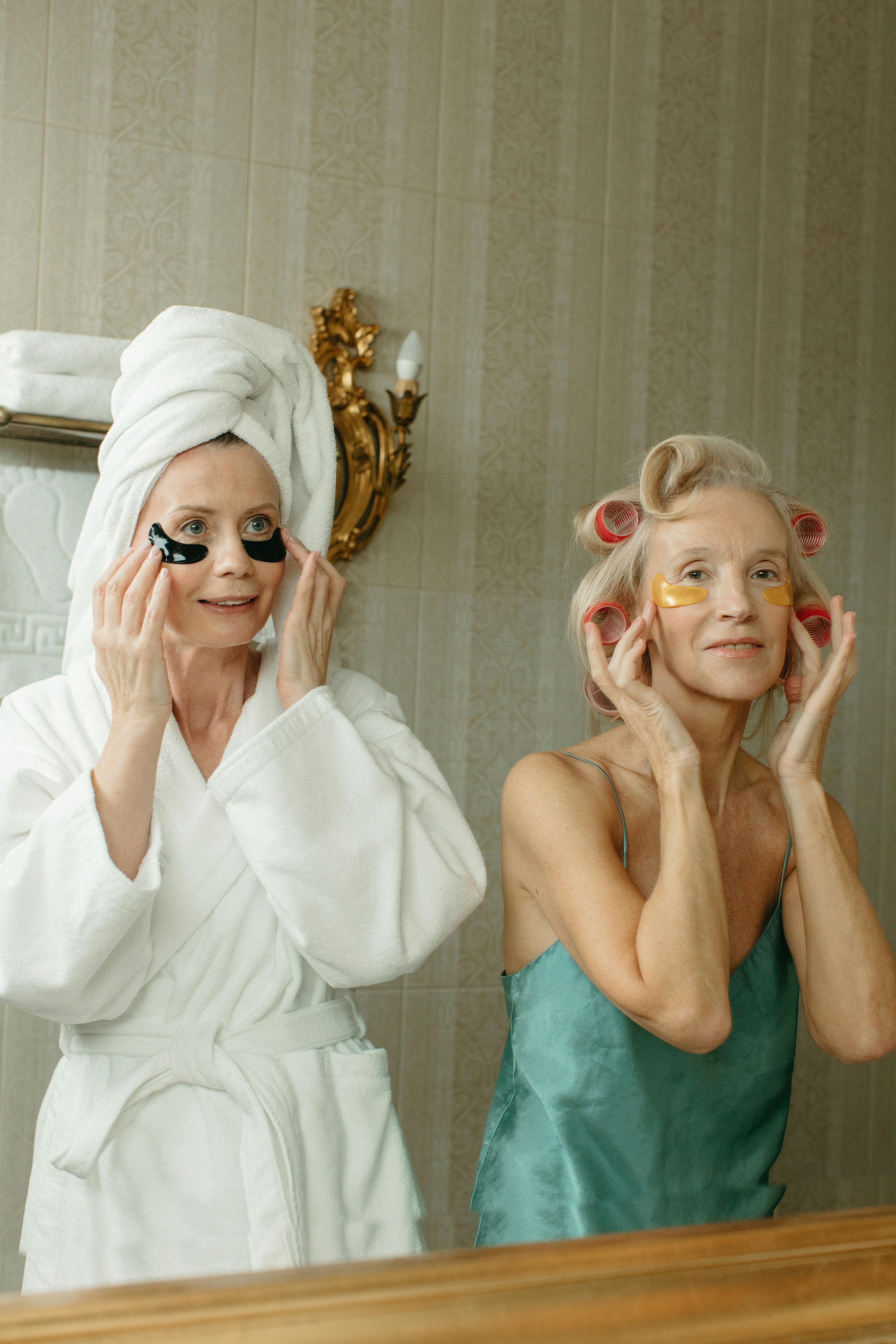
This entire application method matters more during peri/menopause because your skin simply does not function the way it used to. Your barrier, hydration levels, and collagen structure have all changed dramatically. In the first five years of menopause, women lose up to 30% of their collagen, and this loss shows up fastest around the eyes—where skin is the thinnest, driest, and most fragile. This means every small mistake—wrong order, leaving patches on too long, applying too many layers—impacts you more now than it did in your 30s.
How Hormonal Changes Are Rewriting Your Skin’s Operating System
Estrogen decline affects nearly every factor that keeps your under-eyes healthy:
1. Barrier Weakening
Barrier becomes 30–40% weaker
Moisture escapes faster
Irritation happens more easily
2. Skin Thinning
Less collagen means less structural support
Dark circles deepen
Texture becomes more noticeable
3. Reduced Oil Production
Less natural lubrication
Faster dehydration
Fine lines appear earlier in the day
4. Slower Repair & Recovery
Skin takes longer to bounce back
Irritation lasts longer
Barrier damage compounds quickly
Women in your Reddit research describe this perfectly: “My skin is crepey, thin, and nothing absorbs anymore.” “Products I used for years now burn.”
These are classic hormonal signs—not personal failures.
Why Dry Climates Make This Even Worse 🔥
Your skin is already battling hormonal dehydration.
Add low humidity and you get:
Faster water loss
More morning puffiness
More evening dryness
Higher sensitivity and irritation
This creates the perfect storm for why puffy eyes morning menopause becomes so stubborn.
The Sponge Analogy (Your Skin Then vs. Now)
Imagine a sponge left out in the sun. In your 20s and 30s:
The sponge was plush and springy
Water soaked in easily and stayed there
Now:
The sponge is drier, thinner, and more delicate
Water poured on top runs off or evaporates
It requires the right order, timing, and sealing to stay hydrated
Your under-eyes behave the same way.
Why Incorrect Patch Use Hurts More During Peri/menopause
Here’s what goes wrong when patches are misapplied:
Applied over moisturizer → actives never reach the skin
Left on too long → reverse osmosis pulls water out
No eye cream afterward → hydration evaporates quickly
This is the root of the common complaint: “My routine used to work perfectly, and now nothing works.”
It’s not you.
It’s hormone-driven biology.
What If My Skin Has Become Suddenly Sensitive?
If your skin has turned reactive during perimenopause—which happens to about 40% of women—here's how to adjust your eye patch strategy without giving up results.
Start Slowly (Week by Week)
Week 1: Patch test on your inner wrist first. Wait 24 hours. No reaction? Move to step 2.
Week 2: Apply patches for just 10 minutes (not the full 15-20). If no irritation, move to week 3.
Week 3+: Gradually increase to 15 minutes only if your skin tolerates it without burning, redness, or itching.
Choose Gentler Patch Formulas
Avoid retinoids, high % acids, and fragrances while your barrier is healing. Instead, start with hydration-focused patches containing hyaluronic acid, peptides, and ceramides. The best budget-friendly options for sensitive perimenopause skin are:
Peter Thomas Roth Water Drench Hyaluronic Cloud Eye Patches ($75) — pure hydration, zero irritants
111Skin Celestial Black Diamond Eye Mask ($120-140) — includes anti-inflammatory botanicals
Loops Under Eye Mask ($10-15) — simple, gentle, budget-friendly
Adjust Your Application Method
Apply patches to slightly damp skin (not bone-dry), because dry-to-dry contact can create friction and irritation. Use refrigerated patches—the cold naturally reduces inflammation. Always follow immediately with a barrier-repair eye cream containing ceramides and niacinamide. Don't skip this step.
Red Flag Signs (Stop Immediately)
If you notice burning/stinging lasting longer than 2 minutes after removal, redness lasting 30+ minutes, itching, hives, or increased dryness/flaking for 24+ hours, your skin is telling you to pause. Back off to once weekly, switch to a gentler formula, or take a 1-week break entirely.
Dry Climate Factor
Here's something specific to our climate: your transepidermal water loss (TEWL) is already 60-70% higher than women in humid climates. Your barrier is under extra environmental stress. This means sensitive reactions during perimenopause get worse here faster. Layer a thin facial oil over your night moisturizer before bed—this is non-negotiable if you live in Alberta. It seals in hydration and prevents your barrier from losing critical moisture overnight.
Actionable Takeaway:
Because peri/menopause skin loses moisture faster and irritates more easily, always:
Apply eye patches directly after serums
Remove them at 15–20 minutes
Immediately follow with eye cream to lock hydration in
This simple sequence protects your barrier and keeps your under-eyes looking brighter, smoother, and more resilient.
#6: What Results You’ll Actually See (And When)
Once you start using eye patches correctly, results show up much faster than most women expect. The reason you haven’t seen meaningful change before isn’t because the product didn’t work—it’s because you were getting only 30–40% of its potential due to incorrect order and timing. When your skin finally receives active ingredients directly (before moisturizer, worn for 15–20 minutes), the improvements become immediate and visible.
Immediate Results (First Application)
Most women notice visible improvements after just one correct session:
What you’ll see right away:
Smoother, more hydrated under-eyes
A brighter, more “awake” appearance
Reduced puffiness
Makeup gliding on more easily
This aligns perfectly with Reddit reports:
“My eyes finally look alive again.”
“I actually look rested for once.”
Hydrogel cooling reduces swelling, which is especially helpful for why puffy eyes in the morning menopause—the hormone-driven fluid retention that disproportionately affects women 40+.
Clean skin = better absorption.
Patches applied over moisturizer = blocked absorption.
Short-Term Results (2–6 Weeks)
With consistent use (2–3× weekly):
At ~2 weeks:
Softened fine lines
Less crepiness
Brighter, smoother tone
Makeup settling less into lines
At 4–6 weeks:
Collagen-supporting formulas begin creating structural changes:
Improved firmness
Reduced wrinkle depth
Stronger under-eye bounce
🔑 Remember: Women lose up to 30% of collagen in the first five years after menopause, which is why consistent support is essential—not optional.
Long-Term Results (8–12+ Weeks)
With continued correct use:
Noticeable firmness
More even texture
Brighter tone
A reduction in “tired” appearance
Many women say they finally “look like themselves again”
Think of it like watering a very thirsty plant:
🌱 The first drink perks it up… but consistent watering brings it fully back to life.
Actionable Takeaway:
Take a “before” photo today in the same lighting and at the same time of day.
Then compare at 2, 4, and 8 weeks focusing on:
Puffiness
Texture
Fine lines
Brightness
Makeup performance
This is the simplest way to track real transformation—and stay motivated and remember consistent results require the right approach. Explore our 12-week menopause skin cohort for personalized guidance..
#7 What If Eye Patches Aren't Enough? Your Complete Solution Map
Eye patches are phenomenal for daily hydration, de-puffing, and maintaining results. But here's the truth: if you're dealing with severe volume loss, deep wrinkles, or dramatic under-eye bags from fat pad prolapse, patches alone won't be the complete answer. Let me map out your full solution options—from most accessible to most intensive.
Level 1: Correct Application + Consistency (Start Here)
About 80% of women see visible improvement once they switch to the correct application method. But you have to give it time. Your skin needs 8-12 weeks of consistent, proper use before you can fairly say whether patches "work" for you. This is the level where most women should start.
Cost: $20-50/month
Time to results: 4-8 weeks
Realistic expectations: Better hydration, visible de-puffing, fine lines softening, dark circles lightening
Level 2: Add HRT (Hormone Replacement Therapy)
This is where Reddit gets passionate. Women on HRT consistently report: "My skin transformed completely." Here's why: HRT addresses the root cause—estrogen decline. It increases collagen production body-wide, improves skin thickness, enhances hydration at a cellular level, and strengthens your barrier function.
While patches work topically (surface level), HRT works systemically (deep level). Combined? That's when real transformation happens. Talk to your doctor about estrogen patches or cream plus progesterone. It's not just for hot flashes—your skin responds dramatically.
Cost: $50-200/month depending on your insurance and HRT type
Time to results: 6-12 weeks to see skin changes
Realistic expectations: Visible improvement in skin thickness, hydration, elasticity, and resilience
Level 3: Professional Treatments (If Needed)
If you've done correct patches + HRT for 6+ months and still want more help, professional treatments address specific concerns:
For stubborn dark circles: IPL (Intense Pulsed Light) or laser treatments target blood vessel visibility ($500-1,500 per session)
For persistent puffiness: Lymphatic drainage facials or radiofrequency treatments ($200-400 per session)
For volume loss: Sculptra (collagen-stimulating biostimulator) or PRP treatments ($1,000-2,000 per treatment)
For severe bags: Blepharoplasty (surgical eye bag removal—last resort, $5,000-10,000)
Level 4: Combination Approach (Most Effective)
Real talk: women who get the best results don't choose one approach—they layer them. They're on HRT (systemic), using eye patches correctly (topical), and getting professional treatments when needed (structural). This combination addresses the problem from three angles simultaneously: internal hormone support, external hydration and ingredients, and structural improvement.
The Bottom Line
Patches alone won't reverse 30% collagen loss. That's just biology. But patches, combined with HRT and professional treatments if needed, absolutely can transform perimenopause under-eyes. Think of patches as the daily maintenance that extends your professional treatment results and makes your HRT more visible on your face.
What to Do First
Fix your patch application method (free, immediate results)
Talk to your doctor about HRT (addresses the root cause)
Continue patches using the correct method (maintains all your results)
Consider professional treatments only after 6+ months if you've done steps 1-3 and want additional help
Start with what's in your control right now—correct application. Then expand your strategy if needed. Most women find that patches + HRT alone delivers life-changing results.
#8: Your Action Plan: How to Start (This Week)
If you want to see real under-eye changes, the fastest way is to implement the correct method this week. You don’t need new products, a complicated routine, or expensive treatments—just a few strategic adjustments that instantly increase your eye patch effectiveness from 30–40% to 70–100%. This plan is designed for busy perimenopausal women who want results without overwhelm.
But Can I Use Eye Patches If I'm Already on Tretinoin?
Short answer: Yes, absolutely. But with smart strategy.
If you're using prescription tretinoin or strong retinol serums on your face, your under-eye area needs special consideration because the skin there is thinner and more reactive.
Best Approach: Alternate Nights
Monday/Wednesday/Friday: Apply tretinoin serum to face and under-eyes as prescribed
Tuesday/Thursday/Saturday: Apply eye patches (hydrating or gentle retinoid) to under-eyes only
Sunday: Skin barrier recovery day (just cleanser, toner, moisturizer, and eye cream)
This gives your delicate under-eye skin enough tretinoin exposure for anti-aging while giving your barrier days to recover between actives.
Alternative: Use Retinoid Patches Instead
If alternating feels complicated, simply switch to retinoid patches (like Murad Retinol Youth Renewal) applied 2-3 times weekly to under-eyes, and skip separate tretinoin in that area entirely. You're still getting retinoid benefits—just in patch form instead of serum form.
The Critical Thing:
Your under-eye skin is already compromised during perimenopause. Don't over-tretinoin it. Choose one retinoid source for that area—either your prescription or retinoid patches, but not both simultaneously. Your barrier can't handle it.
Week 1 — Adjustment Phase (Low Lift, High Impact)
Use this week to establish the correct technique.
Your Week 1 actions:
Use your eye patches 2–3 times this week
Apply them after serums and before moisturizer
Set a timer for 15–20 minutes every single time
Gently pat in leftover serum
Seal with eye cream to prevent evaporation
This prevents the reverse osmosis effect your research warns about—where patches begin pulling hydration out if left on too long. Women on Reddit describe this as: “My eyes looked more crepey afterward.”
That’s almost always a timing mistake.
Weeks 2–4 — Build Your Routine (Consistency = Transformation)
Once you’ve nailed the method, increase frequency:
Use patches 3× per week in the evening
Nighttime is ideal because collagen repair peaks during sleep
If puffiness is your main issue, add 1 morning application weekly
Use cold patches (fridge!) to help reduce why puffy eyes morning menopause symptoms
This is where cumulative results begin showing up—brighter tone, smoother texture, and less crepey skin.
Think of this plan like watering a dry plant regularly: 🌱 The first drink helps, but the real transformation comes from routine, not randomness.
Your Quick-Start Checklist (Save or Screenshot)
☐ Apply patches before eye cream
☐ Set a 15–20 minute timer
☐ Remove immediately when time is up
☐ Seal with eye cream afterward
☐ Use 2–3× weekly at night
☐ Optional: 1 morning session for puffiness
☐ Take a before photo today
Actionable Takeaway:
Pick two nights this week and commit to the full method. That’s it. You’ll see brighter, smoother under-eyes faster than you think—without buying anything new.
Join our Glow Lounge community for weekly skincare support and product recommendations
Want to chat skincare with us?
Join the Glow Wizard community — get personalized advice & exclusive tips!